
Boston Home Service FAQ: Booking, Estimates, Provider Standards, Access, and Follow-Up
Direct answers about service requests, availability, estimates, licensed work, property access, approvals, documentation, payment, and post-work concerns.
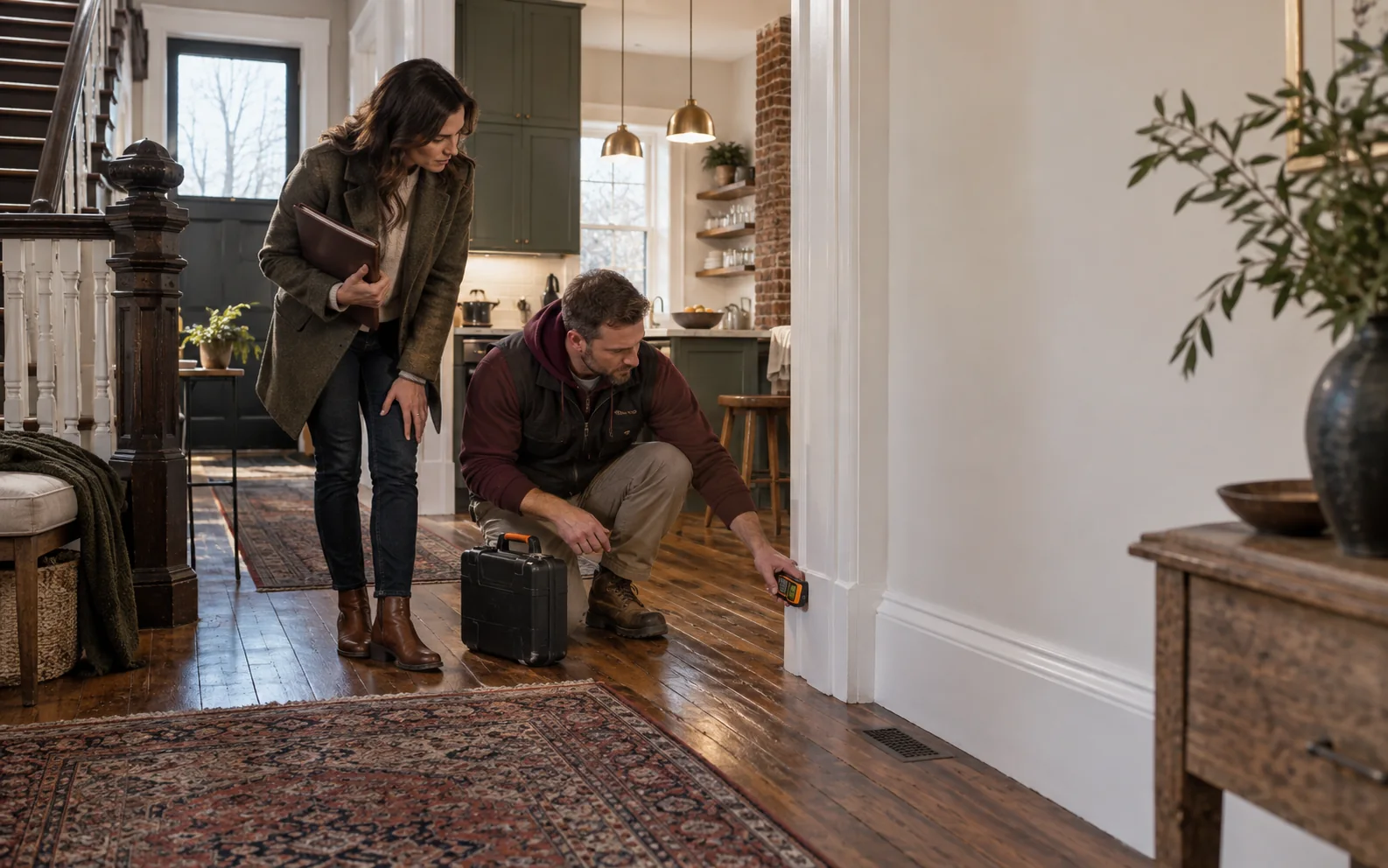
Long-form guidance, broken into working panels instead of an article column.
Each panel answers a different operational question and links the reading back to an action, policy, or related service.
Start with the symptom, not a guessed solution
A useful common home-service decisions before booking request begins with what is happening, where it is happening, and how the condition has changed. Note visible water, heat, odor, noise, loss of power, surface damage, or operating behavior without opening equipment or touching a dangerous source. For customers comparing repair platforms, companies, and individual providers, this keeps the first decision anchored to evidence instead of a premature repair label. Photos can help when they are taken from a safe distance and include both context and detail. The intake should also identify occupants, pets, shutoffs, parking, building rules, and a time when the issue is easiest to observe. People searching for Boston home repair service questions deserve a process that separates urgent safety steps from routine scheduling. That foundation supports a more complete request and realistic expectations before assignment because the arriving professional receives a clear symptom record, not a vague instruction that may point to the wrong trade.
Triage urgency before discussing availability
Urgency is a safety and damage question, not a marketing adjective. Active flooding, smoke, sparking, gas odor, carbon-monoxide alarms, structural movement, or an unsafe loss of essential heat can require emergency services, a utility, a licensed specialist, or temporary isolation before a normal visit. Harborline uses policy-linked answers, decision gates, estimate fields, and work-record requirements to record the reported condition, the guidance given, and why a route was selected. Less urgent conditions are prioritized by growth, impact, access, and the chance that delay will increase damage. This gives customers comparing repair platforms, companies, and individual providers a reasoned scheduling decision and prevents the word emergency from becoming an invented surcharge. In common home-service decisions before booking, the correct next step may be a diagnostic visit rather than immediate repair. The goal is a more complete request and realistic expectations before assignment: move quickly where risk is real, and move deliberately where observation, parts, permission, or trade matching will improve the result.
Match the work to a qualified field role
Home service categories overlap, but qualifications do not. A stain may begin as plumbing, roofing, condensation, or exterior-envelope diagnosis. A nuisance trip may involve an appliance, branch circuit, service equipment, or a condition that belongs with a licensed electrician. The assignment for common home-service decisions before booking therefore considers the symptom, likely system, property type, jurisdiction, access, and whether a license, registration, permit, or specialist is required. customers comparing repair platforms, companies, and individual providers should receive the provider identity and expected role before arrival. Where credentials are relevant, the record should show the credential type and its status rather than a generic verified badge. This approach makes Boston home repair service questions more useful than a list of names because the routing logic is visible. It supports a more complete request and realistic expectations before assignment while leaving room for the field professional to stop, reclassify, or recommend another trade when direct observation changes the initial hypothesis.
Build a field diagnosis that can be challenged
The first site task is to confirm conditions and test reasonable causes without damaging the property or hiding uncertainty. A disciplined common home-service decisions before booking assessment records what was inspected, what was not accessible, readings or functional tests when appropriate, and the assumptions that still affect the solution. The professional should explain the difference between a symptom treatment and a root-cause repair, especially in older Greater Boston buildings where previous alterations, plaster, shared systems, tight cavities, and seasonal moisture complicate access. For customers comparing repair platforms, companies, and individual providers, policy-linked answers, decision gates, estimate fields, and work-record requirements becomes a decision surface: it should be possible to ask why a method was proposed and what evidence would change it. A strong Boston home repair service questions experience does not promise certainty where walls remain closed or equipment cannot be operated. It creates a more complete request and realistic expectations before assignment by making uncertainty explicit, priced, and connected to the next safest diagnostic step.
Turn findings into a comparable written scope
A scope for common home-service decisions before booking should name the work area, preparation, removal, repair method, materials or allowances, protection, testing, cleanup, disposal, and exclusions. It should also state whether patching, painting, finish matching, access restoration, permits, inspections, or third-party work are included. This is how customers comparing repair platforms, companies, and individual providers can compare proposals that otherwise look similar but cover different outcomes. An estimate is not complete because it has a total; it is useful because assumptions and boundaries are readable. In a Boston home repair service questions search, unusually low or high prices often reflect differences in access, labor category, material grade, or omitted closeout work. Harborline links the estimate version to policy-linked answers, decision gates, estimate fields, and work-record requirements, so later discussion begins from the same document. That discipline advances a more complete request and realistic expectations before assignment and reduces the chance that an unwritten expectation becomes a surprise after the work area is opened.
Protect the site and control changes
Before work on common home-service decisions before booking, the crew should agree on access, shutoffs, dust or water containment, floor and surface protection, occupant separation, tool staging, and a safe place for removed material. Existing damage or fragile finishes should be noted before disturbance. If field conditions differ from the estimate, work pauses at a decision gate: describe the condition, show why it matters, provide options, state cost and schedule effects, and record approval before adding work. This is especially important for customers comparing repair platforms, companies, and individual providers when the approver is not physically present. policy-linked answers, decision gates, estimate fields, and work-record requirements preserves the original scope and every accepted revision rather than rewriting history. The method turns Boston home repair service questions from an open-ended visit into controlled production. It also protects a more complete request and realistic expectations before assignment, because a technically valid repair can still fail the customer if access, dust, finishes, or change communication were handled carelessly.
Test the result before calling the work complete
Completion is a testable state, not the moment tools are packed. The closeout test for common home-service decisions before booking depends on the system: observe for leaks, confirm drainage, measure temperature response, operate controls, restore circuits, verify fit and movement, inspect finish transitions, or use another relevant functional check. The professional should explain the test and any limits caused by weather, occupancy, hidden work, or a condition that needs time to stabilize. customers comparing repair platforms, companies, and individual providers can then review policy-linked answers, decision gates, estimate fields, and work-record requirements, including dated images, readings where useful, installed part information, and unresolved observations. A credible Boston home repair service questions provider will also distinguish completed work from recommended future work. That boundary prevents a preventive note from being mistaken for a defect or an automatic upsell. The result is a more complete request and realistic expectations before assignment, supported by a closeout packet that another owner, manager, or professional can understand later.
Choose the next step with realistic expectations
Harborline is designed to improve coordination, not to claim that every problem can be priced remotely, every address has immediate capacity, or every repair has one correct method. The next step for common home-service decisions before booking may be a scheduled diagnosis, a direct trade visit, a multi-trade plan, a permit check, monitoring, or an emergency referral. customers comparing repair platforms, companies, and individual providers should know which step is being requested and what remains unknown before sharing sensitive access information or authorizing cost. Review the provider role, arrival window, diagnostic terms, scope boundaries, change process, payment timing, and closeout expectation. In Boston home repair service questions, these controls are stronger signals than inflated counters or anonymous praise. Harborline uses policy-linked answers, decision gates, estimate fields, and work-record requirements to keep each decision attached to the property and the responsible person. That produces a more complete request and realistic expectations before assignment: not perfection by slogan, but a service path with fewer blind spots and a record that supports correction when conditions change.